Carabiners
Carabiners to be used for climbing shall be CE marked and tested according to EN12275.
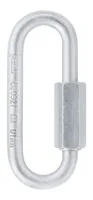
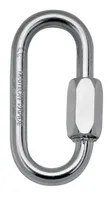
The most common material used in climbing is aluminium, but steel is also used. Steel carabiners weigh 3 times as much, but are more durable (useful for example for top anchors on a climbing wall). Otherwise they have the same performance in terms of strength.
When the carabiner is made, it can either be bent and punched from a bar or heated and moulded (these carabiners are called forged). Forged carabiners have the advantage of being able to shape them better and add extra mass where the load is greatest.
Aluminium is affected by hydrogen (rust). This means that some carbines can be purchased anodised. Anodising means that the carbine is treated to prevent rusting.
Lock mechanics
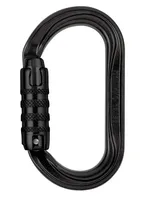
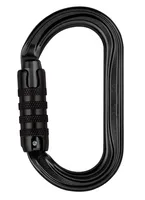
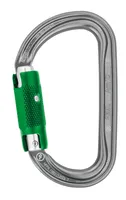
There are several different types of locking devices on carabiners. The most common is manual screw locking, but there are also self-locking variants: q-lock, trip-lock and ball-lock.

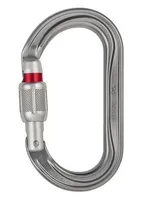
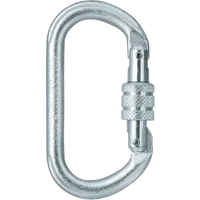
Screw carbine
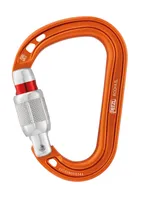
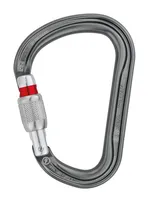
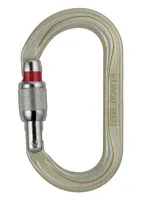
On some models of screwdrivers there is a red safety marking.
This shows that the cabin is not closed. This is very handy as you only have to look at the carboy to be sure it is closed.

Self-locking
Self-locking models are useful for training and trial activities where the user is not used to handling the equipment.

Q-lock
Q-lock is a variant where the gate is turned half a turn before opening.

Ball-lock
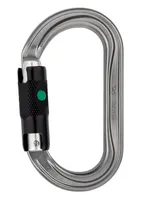
A safer variant of the q-lock mechanism is the ball-lock, where there is a small ball on the gate that must be pressed in before opening. A q-lock carabiner can open in unfavourable circumstances if it ends up lying over the edge.

Trip-lock
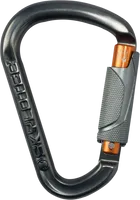
Trip-lock is another variant where the gate is first pushed up and then to the side to open. A variant used on e.g. adventure courses is one where the gate is opened by pushing it downwards before opening.
Gate locking
The lock itself usually consists of a "jack" at the end against which the gate locks. There are variants called key-lock which are very practical as they do not have this "jack". The key lock system prevents the carbine from getting stuck in the loops, harness etc. This is especially practical for trail climbing.
Wire gates are found on some of the carabiners used for lead climbing (not locking). These make the carabiner lighter and can be an advantage in ice climbing as ice does not stick to the gate as easily.
moulds
The shape of the carabiner itself is crucial in terms of what it will be used for.
In trail climbing, small lightweight models without locking are used for the express loops.
There is a curved gate at the end of the rope to be cut and a straight gate at the other end.

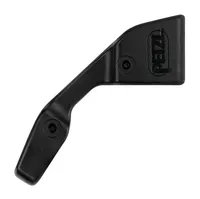
Petzl String
To prevent the curved carbine from spinning when clipping in, a rubber mount "Petzl String" can be fitted to lock it in place. Petzl String is available in different sizes and fits several types of slings.

HSE
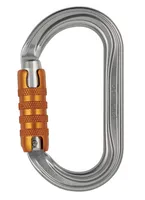
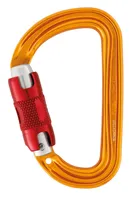
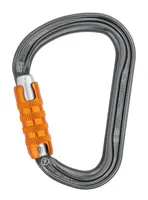
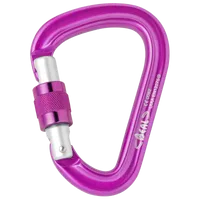
The most common lock model is called HMS and is a screw carabiner. They are adapted for use with HMS knots due to their pear shape.
They are also used to build anchors and as a securing carabiner for the harness.

D-shape
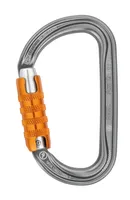
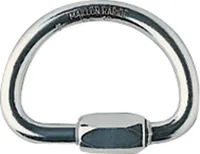
D-shaped carabiners are suitable for connecting chest straps etc. as they can be loaded in 3 directions.

Special Carabiners
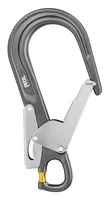
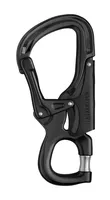
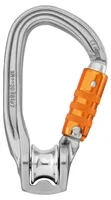
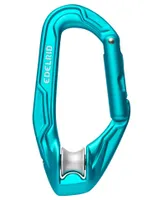
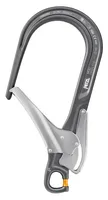
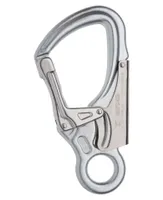
Special Carabiners with extra loop is used where there is a need for extra friction. For example, when firing from the top. Plastic material carabiners are only for material as they do not hold more than a maximum of 5 kg. When they sit on the harness, they are angled outwards, which makes it easier to connect ice screws, for example.

Celebratory eights
Some products are customised for specific carbine models. For example, this celebration mat has a hole for the carabiner that does not fit all types of carbines. With the right carbine, the eighth will not slide around on the carbine but remain in its proper position.
More on carbines
Read more in the PDFs below.
 150 products