

Find the right fall protection harness for your work
Working at height requires the right equipment, knowledge and responsibility.
But which harness should you choose and what do the EN standards actually mean?
What does a fall arrest harness do?
The fall arrest harness is the heart of your personal fall protection system. It distributes the load in the event of a fall and ensures that you hang steady and can be rescued quickly. But not all harnesses are created equal. The choice of harness affects not only safety, but also ergonomics, freedom of movement and comfort throughout a working day.
Which fall arrest harness should I choose?
For your harness to provide maximum protection, it needs to be chosen based on how you work, where you are and the freedom of movement you need. Below we guide you to the right type of harness based on the EN standards that define areas of use and safety requirements.
A personal fall arrest system always consists of several parts that need to work together, usually a harness, an anchorage point and connecting equipment. If the components are sold separately, it is crucial to ensure that all parts are compatible and together provide the protection the system is intended for.
All parts of a fall arrest system should be clearly labelled and tested to work together according to the instructions for use, this is your proof that the equipment meets the requirements of the EN standards. If you are unsure whether your equipment can be safely combined, always contact the supplier or our certified trainers for advice.
| Example image | Type of work | Recommended harness | EN standard(s) | Short description |
|---|---|---|---|---|
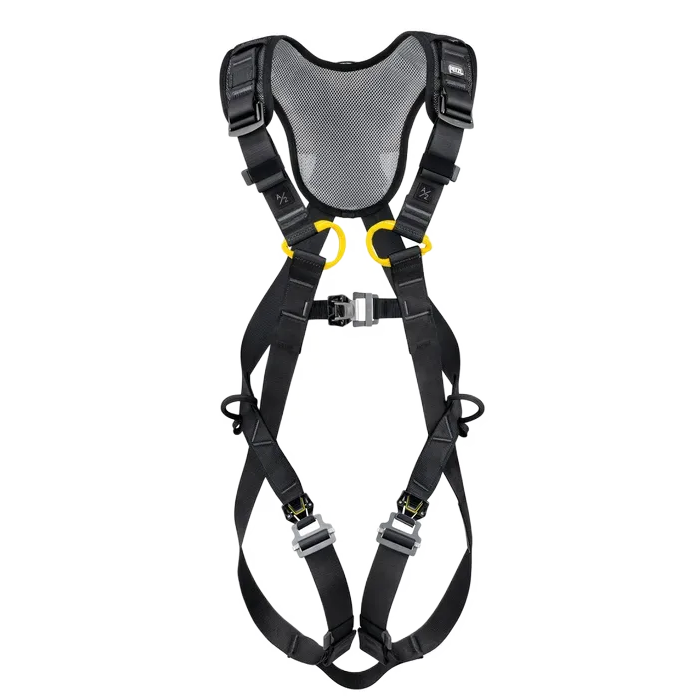 | General work at height | Simple fall arrest harness | EN 361 | Basic harness with front and/or rear attachment. Suitable for construction, industry, service. |
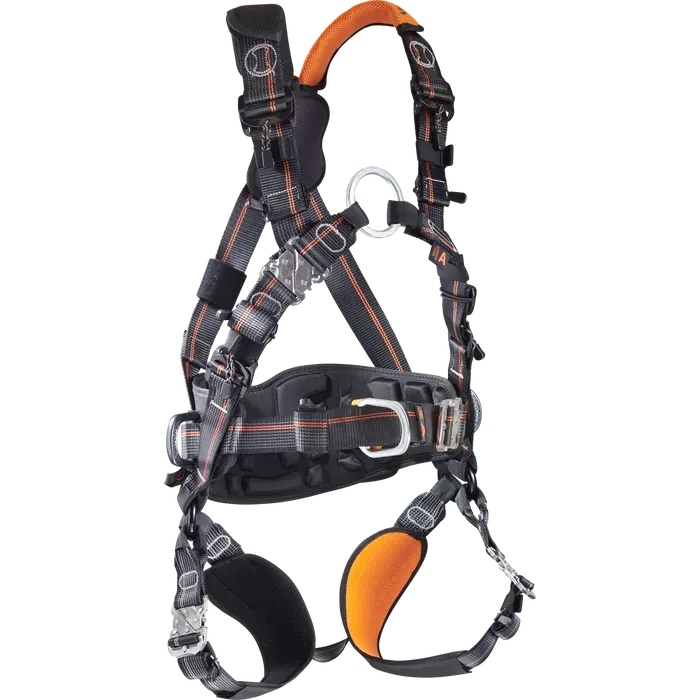 | Mast and pole work | Fall arrest harness with support belt | EN 361 + EN 358 | Provides extra support and positioning when working where you need to lean against the rope. |
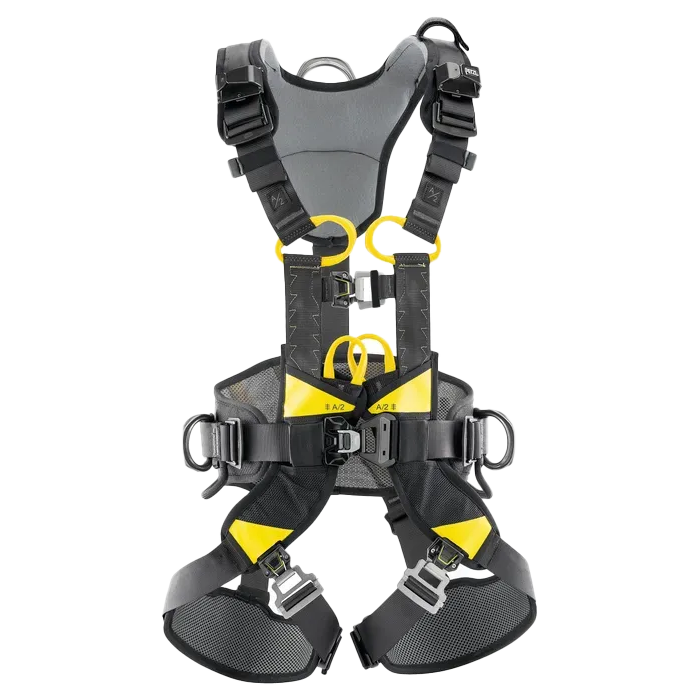 | Rope access or suspended labour | Harness for suspended work | EN 361 + EN 358 + EN 813 | For work where you are hanging in the harness - e.g. wind power, facade work, rock work. |
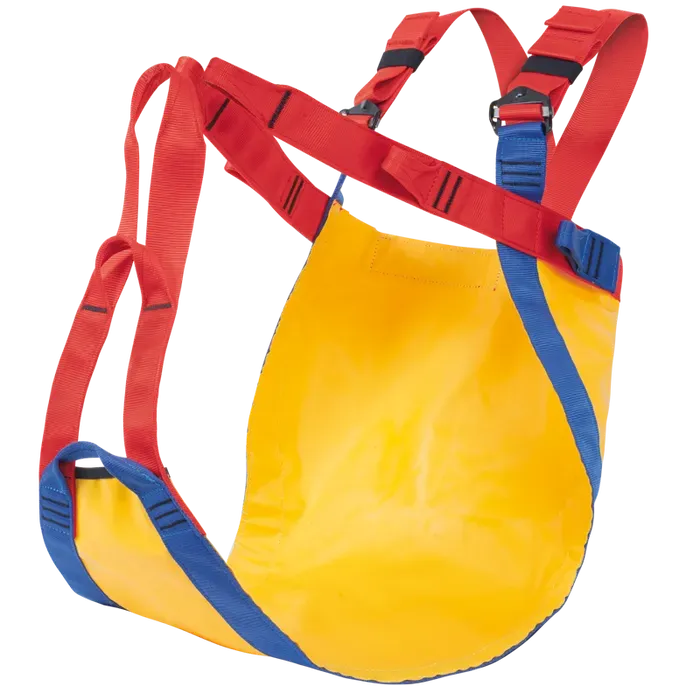 | Rescue and evacuation | Rescue harness | EN 1497 | For rescue and evacuation in the event of a fall. Often combined with fall arrest systems (EN 355). |
General work at height - full body harness (EN 361)
The classic and most widely used harness for working at height. A full body harness distributes the load of a fall and protects the user from hitting the ground or obstacles. It is the basis of all fall protection systems and is used in construction, industry, roofing and service work.
Mast and pole work - harness with support belt (EN 361 + EN 358)
When working on a pole, mast or structure where you need support, a fall arrest harness with a support belt is the right choice. It makes it possible to lean against the rope and work stably with free hands. The support belt also provides relief during longer work shifts.
Rope access and suspended work - harness with support belt (EN 361 + EN 358 + EN 813)
For work where you hang freely in the harness, such as rope access work, facade work or wind turbine maintenance, a harness with a seat section is required. It combines the safety of a full body harness with the comfort of a sit harness - perfect for long shifts at height.
Rescue and evacuation - rescue harness (EN 1497)
In rescue or evacuation, time is of the essence. A rescue harness is designed to quickly and safely lift or carry a person to safety. It is used by emergency services, in industry and in planned evacuations from height.